You open the door after a walk and your dog charges in, trailing mud across the floor. If this is a daily occurrence, you either need a system or you need to resign yourself to perpetual floor cleaning. Here are the methods that actually work — ranked by speed and thoroughness.
Method 1: Automatic paw cleaner (fastest, most thorough)
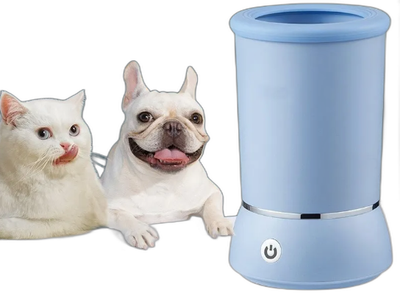
An automatic paw cleaner is the most efficient tool invented for this problem. Fill it halfway with water, insert one paw, twist gently back and forth for 5–10 seconds, pull it out, and wipe with a towel. Repeat for each paw. Total time: under 60 seconds for all four paws.
The soft silicone bristles reach between the toe pads — the area that a cloth wipe misses entirely, and where most of the mud actually hides. The clean water surrounds the entire paw rather than just smearing the mud around on a towel's surface.
Most dogs adapt to it within 3–5 uses. The sensation of the bristles is gentle and the dipping motion becomes routine quickly.
Method 2: Damp microfiber cloth wipe
Fast and practical for lightly dirty paws. Keep a stack of damp microfiber cloths near the door. Wipe each paw individually, paying attention to between the toes. Microfiber is more effective than regular towels because the texture grabs debris rather than pushing it around.
Limitation: doesn't work well for genuinely muddy paws. Mud between tightly-packed toes requires either the paw cleaner or a rinse.
Method 3: Shower rinse
For heavily muddy paws, a quick rinse in the shower or tub with a handheld shower attachment is the most thorough option. Run water over each paw while gently separating the toes. 30 seconds per paw, then dry thoroughly.
This is the only method that removes heavy clay mud, dark soil, or ice salt completely. Dry each paw with a quick-dry towel after — damp paws in cold weather or on cold floors are uncomfortable for dogs.
Method 4: Pet wipes
Pet-safe wipes are the lowest-setup option. Grab one, wipe each paw. No water needed. Good for travel, trail parking lots, or situations without access to water.
Limitation: like microfiber, wipes smear rather than remove mud from between toes. They work best for light surface dirt and allergen removal rather than mud.
Why paw cleaning matters beyond the floors
The reason to clean paws isn't just about clean floors. Dogs lick their paws constantly, and paws pick up everything on the streets: pesticides on lawns, road salt in winter, fertilizers in parks, bacterial contaminants, and allergens.
If your dog has seasonal allergy symptoms (itching, red eyes, scooting), environmental allergens coming in on the paws are a common trigger. A daily paw rinse or wipe after outdoor time often reduces allergy symptoms noticeably, as it removes the allergen before the dog can lick it off their paws or walk it onto furniture.
Road salt in winter is particularly important to remove. Beyond the toxicity risk from licking, salt dries out and cracks the pad surface. A paw cleaner rinse after winter walks and an application of paw balm to keep pads moisturized goes a long way toward preventing cracked, painful pads in cold months.
Setting up a door station
The easiest way to make paw cleaning a consistent habit: set it up at the door. A small table or shelf with the paw cleaner, a stack of microfiber cloths, and paw balm means everything needed is in one place. The dog learns the routine — walk in, paws get cleaned, then freedom. Once it's routine, it takes less mental energy than remembering where you left the cloth this time.